
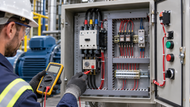
An industrial motor starter plays an important role in controlling and protecting electric motors used in commercial and industrial equipment. However, electrical faults, worn components, and improper settings can interrupt operation and cause unexpected downtime. Understanding common problems can help maintenance teams recognize warning signs and determine when professional troubleshooting or replacement is necessary.
Industrial Motor Starter Problems
1. Motor Starter Won't Engage
When an industrial motor starter fails to engage, the motor may not receive power even when the start command is activated. Possible causes include missing control voltage, a damaged contactor coil, or an interrupted control circuit.
A qualified electrician can evaluate the control circuit, power supply, and contactor components to identify the problem.
2. Overload Relay Keeps Tripping
Overload relays protect motors against sustained excessive current. Repeated trips may indicate several underlying problems:
- Mechanical overload: Excessive demand on the motor.
- Phase loss: A missing electrical phase.
- Incorrect settings: Improperly configured overload protection.
- Voltage imbalance: Uneven voltage between phases.
Repeatedly resetting the relay without investigating the cause can expose equipment to additional damage.
3. Buzzing or Humming Noises
An unusual buzzing sound may indicate problems with the electromagnetic contactor. Common causes include insufficient coil voltage, worn contactor components, or mechanical interference.
While some operating sounds are normal, persistent or unusually loud noises should be evaluated before the condition worsens.
4. Contactor Won't Stay Engaged
A contactor that repeatedly opens and closes may interrupt motor operation. This behavior, sometimes called contactor chattering, can result from unstable control voltage, faulty auxiliary contacts, or problems within the holding circuit.
Diagnosing the control circuit can help determine whether the issue involves the contactor or another connected component.
5. Motor Starter Is Overheating
Excessive heat is another warning sign of an industrial motor starter problem. Loose electrical connections, overloaded components, and deteriorating contacts can contribute to elevated operating temperatures.
Discoloration, unusual odors, or visible damage may indicate overheating. Equipment showing these symptoms should be assessed promptly by qualified personnel.
6. Motor Starts but Stops Unexpectedly
Unexpected motor shutdowns can occur when overload protection activates or the control circuit loses its operating signal.
The problem may also originate outside the starter, including mechanical equipment failures or interruptions from external controls. Identifying the actual cause helps prevent unnecessary component replacements.
7. Has Worn or Damaged Contacts
Electrical contactors experience wear through repeated switching operations. Over time, electrical arcing can damage contact surfaces and affect their performance.
An industrial motor starter with severely deteriorated contacts may experience unreliable switching, excessive heating, or complete failure.
When Should You Replace an Industrial Motor Starter?
Not every malfunction requires replacing the entire starter. Some problems can be resolved by repairing connections or replacing compatible components.
However, replacement may be necessary when equipment shows signs of:
- Extensive damage: Burned contacts or melted components.
- Repeated failures: Recurring problems despite repairs.
- Obsolete components: Parts are unavailable or unsupported.
- Changing requirements: Existing equipment no longer meets operational needs.
Before choosing a replacement, consider the motor's horsepower, voltage, full-load current, and operating requirements. Proper starter selection helps maintain reliable performance and appropriate overload protection.
For safety, electrical inspection and servicing should follow applicable OSHA lockout/tagout requirements and be performed by qualified personnel.
Find Reliable Motor Control Solutions at National Motor Starters
At National Motor Starters, we manufacture enclosed IEC and NEMA magnetic motor starters for commercial and industrial applications. With over 50 years of manufacturing experience, we prioritize quality, flexibility, and reliability.
Our starters feature Schneider Electric contactors and overloads, are manufactured to UL standards, and undergo thorough quality assurance checks.
Whether you're replacing outdated equipment or planning a new installation, we offer configurable motor starter solutions to meet your electrical requirements.